
Why Structure, Not Prompts, Creates Clarity
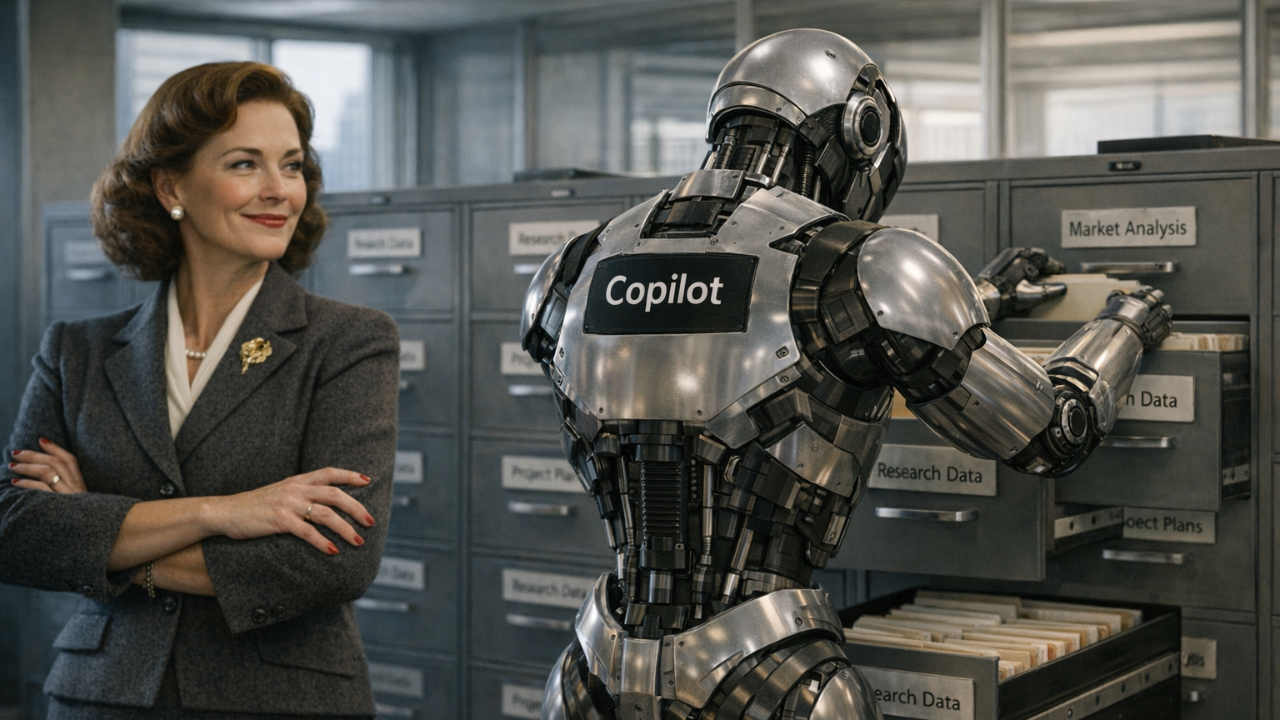
Many leaders assume that if Copilot feels unreliable, the solution is to ask better questions. Write clearer prompts. Be more specific. Try again.
That instinct makes sense — and it misses the real issue.
Copilot doesn’t struggle because leaders ask the wrong questions. It struggles when the organization itself is hard to read. When information lives in inboxes, side conversations, personal files, and people’s heads, there’s very little for Copilot to work with. The answers it produces aren’t wrong so much as incomplete.
This is why structure matters.
Structure isn’t about adding bureaucracy or slowing work down. It’s about deciding, deliberately, where work lives so it can be seen.
When conversations happen in Teams channels instead of private messages, context accumulates. You can scroll back and understand not just what decision was made, but why it was made.
When documents live in a single SharePoint library instead of scattered across desktops and email attachments, everyone knows which version matters. Time stops being wasted reconciling duplicates or second‑guessing whether the file is current.
When commitments and status updates are captured in shared lists, work becomes explicit. What’s done, what’s blocked, and who owns the next step are no longer matters of opinion or memory.
Individually, these changes feel small. Collectively, they make work legible.
And legible work behaves differently.
Leaders spend less time getting oriented and more time deciding. Meetings move faster because reality doesn’t have to be reconstructed first. Questions get sharper because leaders aren’t guessing where to dig.
This is also the moment Copilot starts to change.
When information is visible and connected — conversations in Teams, documents in SharePoint, commitments in lists — Copilot stops guessing. It can synthesize across what’s already there. It can summarize what actually changed, surface patterns, and connect dots that leaders don’t have time to trace manually.
In other words, Copilot becomes useful not because it got smarter, but because the organization did a better job of writing things down in the right places.
That’s why focusing on information structure isn’t a technical exercise. It’s a leadership one. Leaders who invest in making work visible reduce friction across the entire organization — for people and for AI alike.
The payoff isn’t more process. It’s clarity.
And clarity changes how leadership feels.
Stay connected!
Join our mailing list to receive cutting edge content.
Don't worry, your information will not be shared.
Categories
All CategoriesThe Author

Arnie Howes
Arnie Howes has spent more than 25 years working with hundreds of organizations, using Microsoft collaborative technologies and Lean Office techniques to eliminate email overload and information chaos.
Receive cutting-edge content from the author!
