
100% of your company's knowledge should be one conversation away.
Ask your phone. Get the answer. Keep drilling down until you're satisfied.
When leaders start expecting answers this clearly, Copilot AI stops feeling abstract and starts feeling useful.
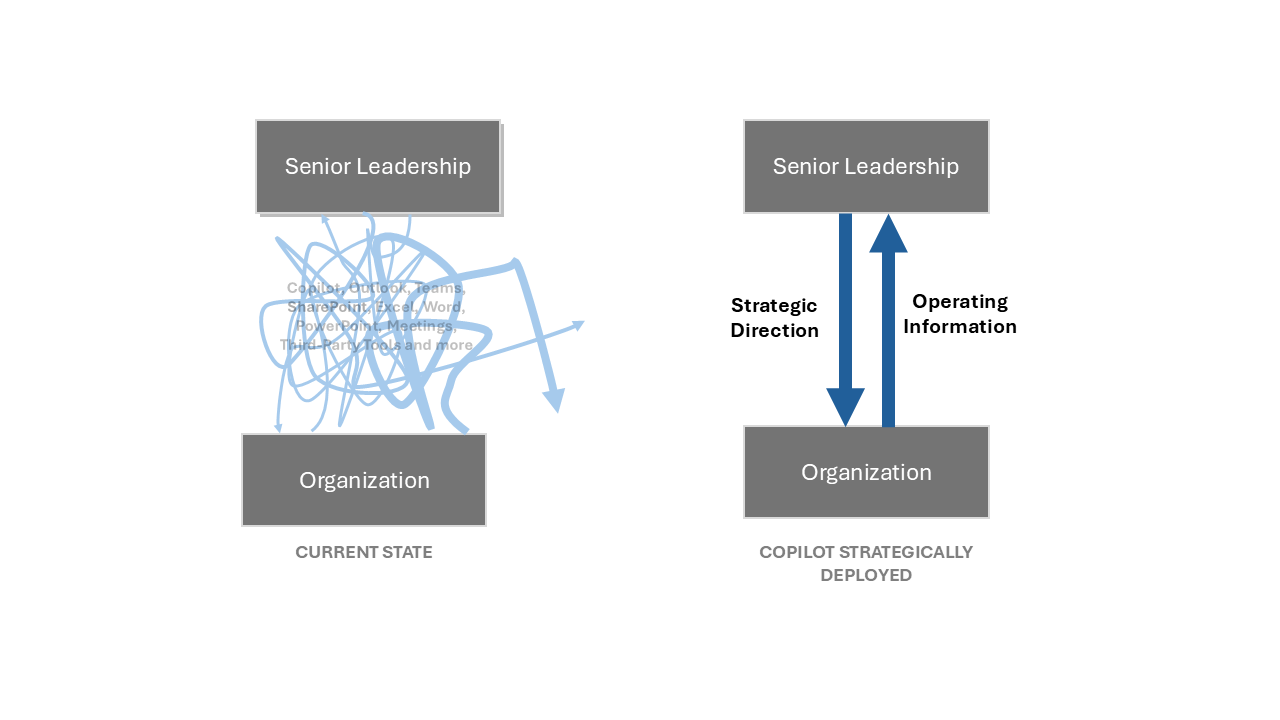
Most organizations don’t have a strategy or operating problem. They have a visibility problem.
When strategy flows down and operating reality flows up, Copilot finally has something useful to work with.
How Clarity Breaks Down in Leadership
Most leaders don’t struggle because their people aren’t working hard enough.
They struggle because the reality of the operation never quite arrives in one place at one time.
Information is scattered across meetings, emails, texts, chats, spreadsheets, hallway conversations, and personal notes. By the time leadership sits down to make a decision, they’re mentally reconstructing what’s really going on from scattered fragments.
It’s exhausting—and subtle. Smart people are doing the right things. Problems don’t announce themselves. And leadership spends more time chasing clarity than acting on it.
This isn’t a people problem.
It’s a visibility problem.
Work is happening. But leadership can’t see it clearly as it unfolds.
Operational clarity doesn’t come from better prompts, more reports, or smarter dashboards.
It comes from how work is captured, structured, and connected as it happens.
When information lives in side conversations, personal notes, and after‑the‑fact updates, no amount of intelligence—human or artificial—can reliably reconstruct reality later. Dashboards reflect only what was entered, and AI can only reason over what it can actually see.
Clarity isn’t about capturing everything.
It’s about capturing the right things, consistently, in shared space.
When that structure exists, leadership doesn’t need to chase updates or mentally reconstruct the business. Reality flows upward naturally, with less effort and fewer surprises.
Clarity isn’t installed.
It’s designed.
The OMG System: Organize. Manage. Grow.
Every organization already organizes, manages, and grows - the only question is whether it happens by design or by accident.
Organize
Organize is about making work visible, findable, and shared - without forcing people to think differently or adopt unnatural processes.
It brings scattered fragments of information into shared space, where it can actually be used.
Manage
Manage is about keeping goals, priorities, issues, and decisions in front of the organization every day - so leadership isn't relying on memory, status meetings, or gut feel to stay aligned.
Grow
Grow becomes possible only after clarity exists. When work is visible and managed intentionally, organizations can improve processes, reduce surprises, and make better decisions without adding friction.
Copilot AI doesn't create this clarity. It benefits from it.
A Practical Starting Point
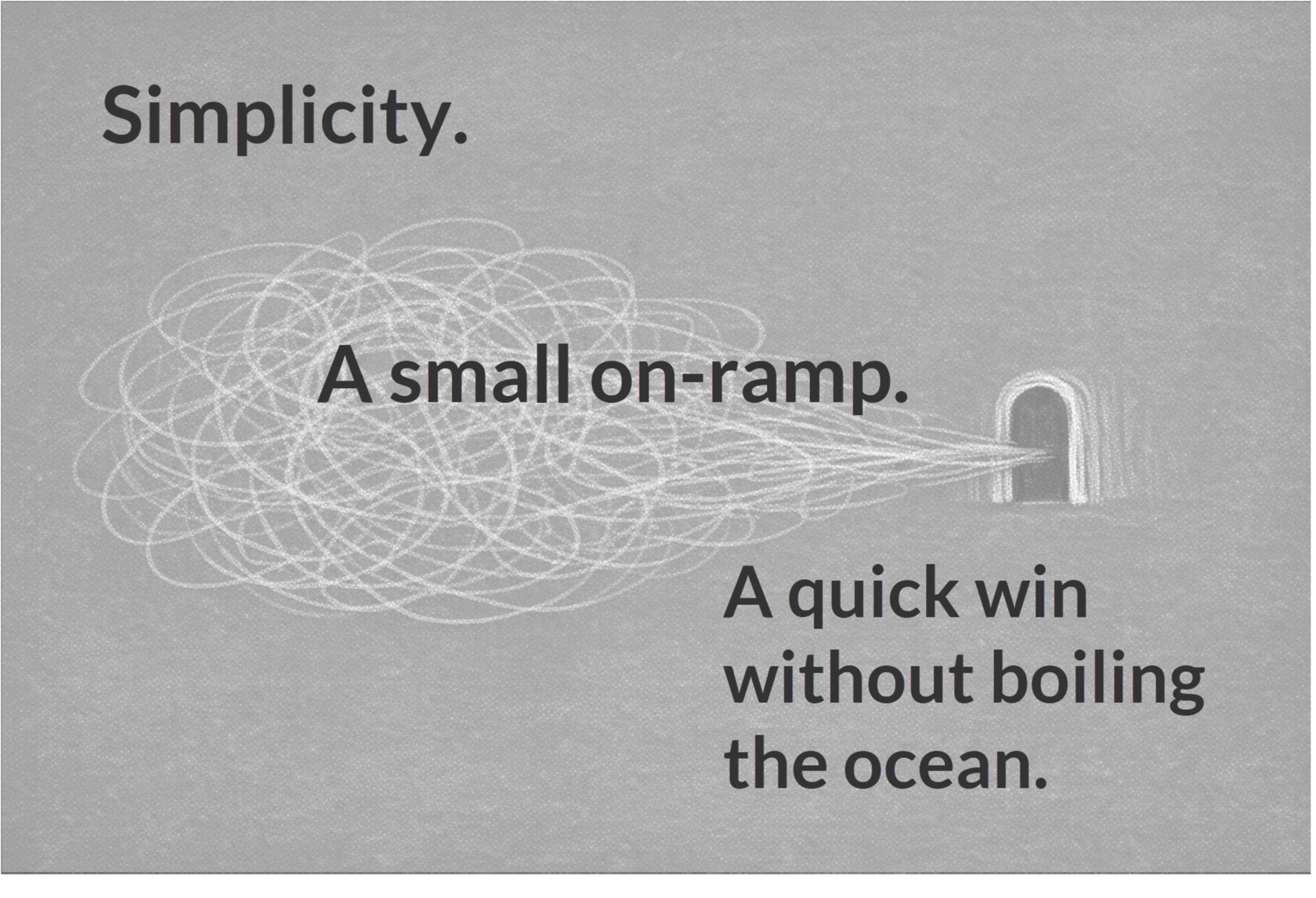
You don't start by rebuilding everything.
You start by creating one place where reality shows up clearly enough that leadership doesn't have to chase it.
This work begins with a deliberately small, contained starting point. One Team.
A simple structure.
A focus on what changed, what's off track, and what leadership needs to know sooner. Instead of reconstructing reality after the fact, leadership begins seeing it as it unfolds. Not through more reporting - but through cleaner structure. Because the scope is intentionally small, the impact shows up quickly - without training programs, new systems, or organizational disruption.
Once that structure exists, Copilot finally has something useful to work with. It can summarize what happened, surface emerging issues, and reduce the mental load on leadership - so answers come quickly without having to chase people or reports, because it's reasoning over shared reality instead of scattered fragments.
Who this work is for - and who it isn't for:
This work is designed for executives, owners, plant managers, and senior leaders who want fewer surprises and clearer operating awareness—without adding more noise to their day.
It’s for organizations that already have capable people and good intent, but struggle with visibility because work is scattered across conversations, tools, hand‑offs, and after‑the‑fact updates.
If leadership often feels like piecing together reality from scattered fragments just to make basic decisions, this work tends to resonate quickly.
The Quick Win is intentionally small and practical. It’s meant to improve clarity in one contained area, fast—without forcing cultural change, mass training, or a system overhaul.
This is not for organizations looking for tool demos, AI hype, or generic training on how to “use Copilot better.”
It’s also not a fit if the goal is to install a system without adjusting how work is surfaced as it happens, or to delegate clarity upward without shared responsibility.
If leadership expects immediate, organization‑wide transformation without a small, intentional starting point, this approach will likely feel frustrating.
The Quick Win is designed to stand on its own. If it proves useful, you’ll know quickly. If it doesn’t, there’s no pressure to continue and no requirement to expand further.
That said, some organizations may be better served by engaging at a different level—either by addressing broader organizational structure directly, or by focusing on simpler team‑level improvements where fewer layers are involved.
In those cases, the OMG components can be engaged independently, outside the Quick Win, as a more appropriate starting point.

Start with a conversation about clarity.
No demos. No pressure.
Just an honest conversation about how work shows up today - and where clarity tends to break down.
Request a conversation See How a 30-Day Quick Win Works